Your GPS Isn’t Wrong. Our Course Isn’t Either.
Your watch said 3.18 miles for a 5K? Here’s how we measure our race courses, why your GPS reads long, and how running the tangents can save you a few steps.
You crossed the finish line, looked down at your watch, and it said 3.18 miles. For a 5K. So the course was long, right?
Nope. Two things can be true at the same time: the course was measured correctly, AND your GPS is right that you ran a little farther. Here’s how that works, and how to save yourself a few steps next time.
How Race Courses Are Measured
Course measurers don’t rely on GPS. They use calibrated devices that count the actual distance along the path they follow.
And the path they follow is the shortest possible route: the smoothest legal line through every turn, cutting from corner to corner, tangent to tangent. It’s the shortest way a runner could legally get from the start to the finish.
Many course measurers even build in a tiny cushion, called the Short Course Prevention Factor, so the course comes out just slightly longer than advertised. Why bother? Because a long course isn’t great, but a short course is really bad.
How We Measure Ours
Every Fit & Able course is measured on the tangents, the same way certified road races are. That means nobody can run our course shorter than the posted distance (at least, not fairly).
We also don’t copy last year’s markings. We measure and mark every course fresh before every race.
We know this way of measuring isn’t every runner’s favorite. It is the right way to do it, though, so we’d rather be upfront about it. The pre-race email you get the week before race day and the instructions at the start line both cover the same three things:
The course is measured on the tangents. That’s the shortest possible distance through the turns.
The long way around adds up. If you stay to the right and take the long way around every turn, the whole way, your GPS will correctly say you ran long.
Other people use the trails, too. The course stays open to other users, so please keep right when you need to for two-way traffic.
Why Your Watch Reads Longer
Here’s the part that surprises a lot of runners: almost nobody runs that perfect shortest line.
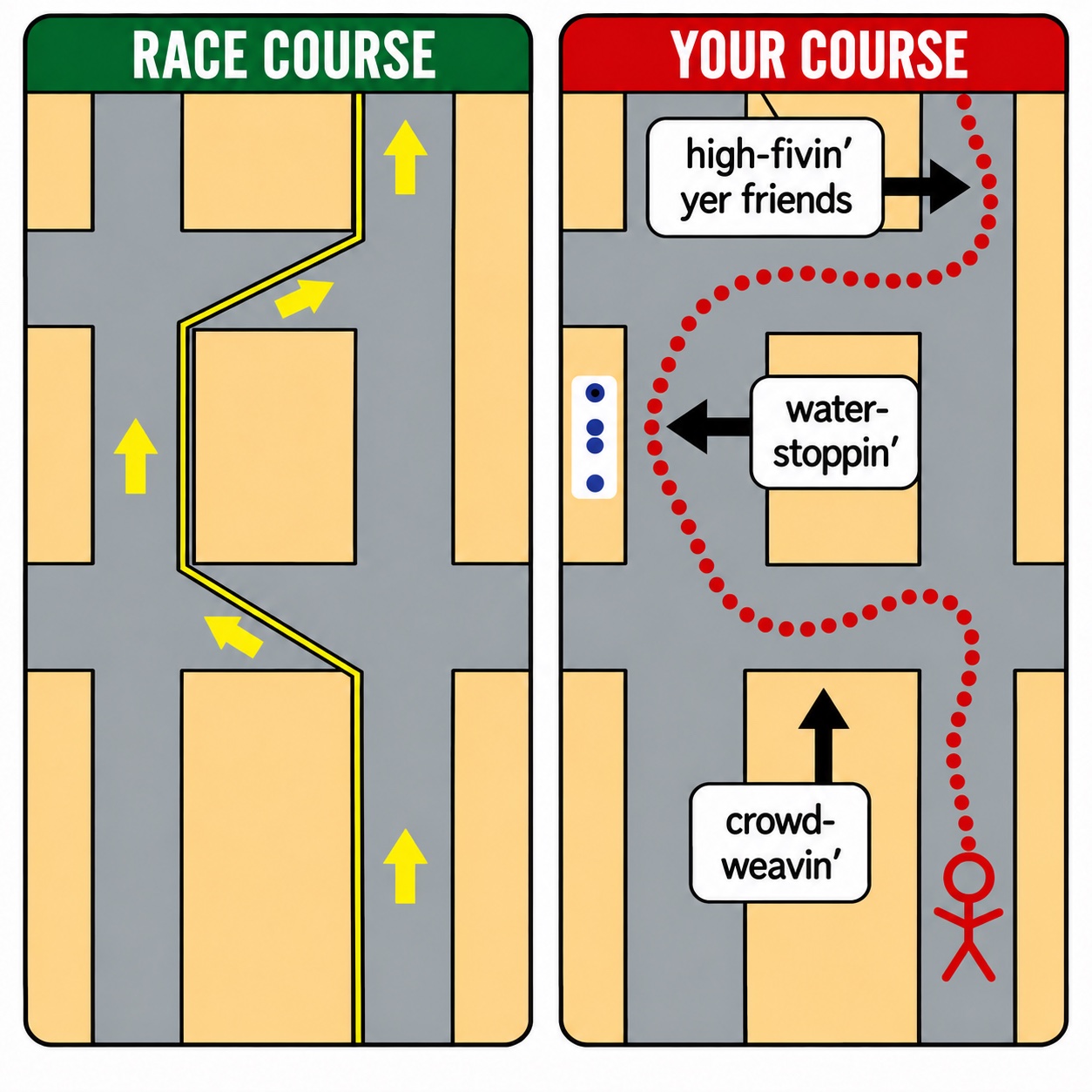
Every time you swing wide around a corner, weave past other runners, stop at a water station, or zig-zag through the crowd, you add a little distance. By the finish, a certified 5K showing 3.15 to 3.20 miles on your watch is completely normal, and a marathon can read several tenths of a mile long.
Same course, same start, and same finish for everyone. Your line was just a bit longer.
What Your GPS Can (and Can’t) Do
GPS watches and phone apps are great for tracking your own training. Measuring a race course accurately isn’t what they’re built for.
Their readings drift when buildings, trees, or tunnels block the signal, when the weather or solar activity gets in the way, and when the signal bounces off nearby surfaces before it reaches your wrist (that last one has a name: multipath interference).
The device matters, too. A Garmin, a Suunto, an Apple Watch, and a phone all use different GPS receivers, and some hold up better than others in tricky spots like city streets or thick woods.
Story time: we once had a husband and wife who ran side by side the entire race. One GPS came up long. The other came up short. The average of the two? Pretty much spot on.
You’ll find more on GPS variability on the Course Maps page of every event site.
Try This at Your Next Race: Run the Tangents
Here’s a fun challenge. Look ahead, and take the straightest legal line from one turn to the next instead of hugging one side of the road or trail the whole way.
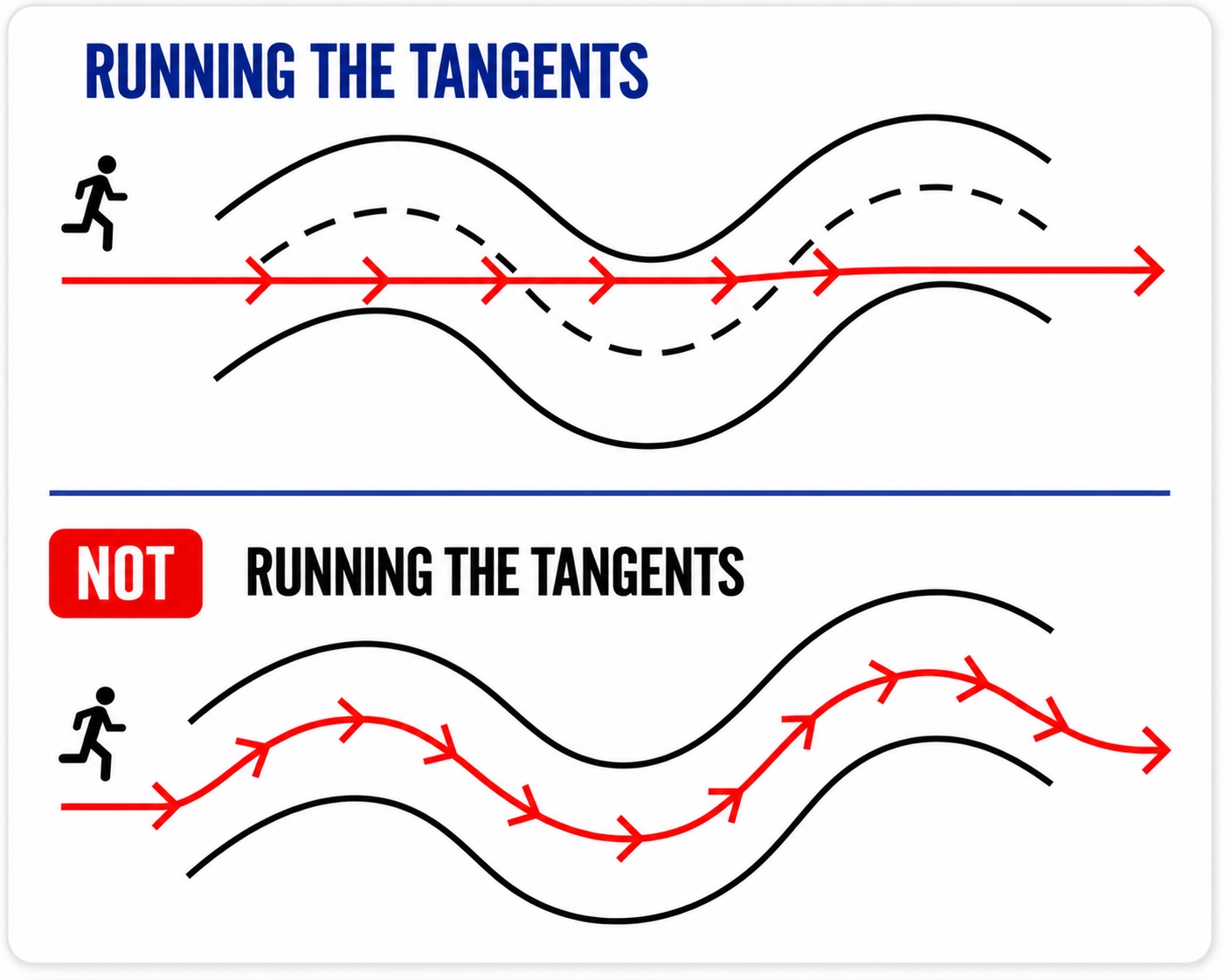
Do it safely, and keep right when there’s two-way traffic. You won’t be running any faster, but you’ll cover less ground, and that alone can save you precious seconds.
Save some steps, finish faster, and we’ll see you at a start line soon!
PS: If your GPS says you ran an extra quarter mile, congratulations. You just earned some bonus exercise, absolutely free.
See You at a Start Line Soon
Every Fit & Able race is open to anyone, of any age, skill level, or ability.